Installing a commercial-grade range—such as a 48-inch or 60-inch dual-fuel range from Wolf, La Cornue, or BlueStar—is a central aspiration in high-end Manhattan kitchen renovations. These pro-style gas burners deliver 20,000 to 25,000 BTU/hr per burner, requiring powerful range hoods capable of exhausting 800 to 1,400 cubic feet per minute (CFM) of heat, grease vapors, and combustion byproducts.
In a modern, airtight Manhattan apartment or a pre-war co-op undergoing gut rehabilitation, exhausting 1,200 CFM of air without an engineered supply of replacement air creates severe building safety hazards. Negative indoor air pressure can backdraft carbon monoxide from atmospheric water heaters and fireplaces, draw sewer gas through dried plumbing traps, pull dust and odors from neighboring apartments through wall cavities, and create severe whistling around entrance doors that make them physically difficult to pull open.
Under NYC Mechanical Code Section 505.2, any residential exhaust hood system capable of exhausting more than 400 CFM strictly requires an engineered make-up air system interlocked with the exhaust fan. Here is how TRD Builders engineers and installs compliant, comfortable kitchen ventilation in dense Manhattan residential buildings.
The Physics of Negative Pressure in Tight Urban Envelopes
A luxury kitchen range hood exhausting 1,000 CFM draws approximately 60,000 cubic feet of air out of the residence every hour—equivalent to evacuating the entire air volume of a 3,000-square-foot luxury apartment every three minutes.
If outdoor air cannot enter at the exact same rate, the apartment enters negative air pressure:
| Static Pressure Differential | Physical Symptoms & Building Hazards | | :--- | :--- | | -3 to -5 Pa | Audible whistling around entry doors, air infiltration through electrical outlets | | -5 to -15 Pa | Backdrafting of atmospheric gas appliances, flues, and wood-burning fireplaces | | -15 to -30 Pa | Kitchen hood motor strain, dramatically reduced exhaust flow, grease buildup | | -30+ Pa | Difficult-to-open corridor entry doors, air pulled across co-op demising partitions |
Beyond life-safety risks, the New York City Energy Conservation Code (NYCECC) prohibits dumping unconditioned, freezing winter air or humid summer air directly into living spaces. Replacement air must be tempered, filtered, and precisely balanced.
Engineered Solutions for Luxury Apartment Make-Up Air
At TRD Builders, our MEP engineers implement three primary system designs depending on the building's physical envelope and co-op board regulations:
Dedicated Direct-Fired or Electric Pre-Heat Make-Up Air Units (MAU)
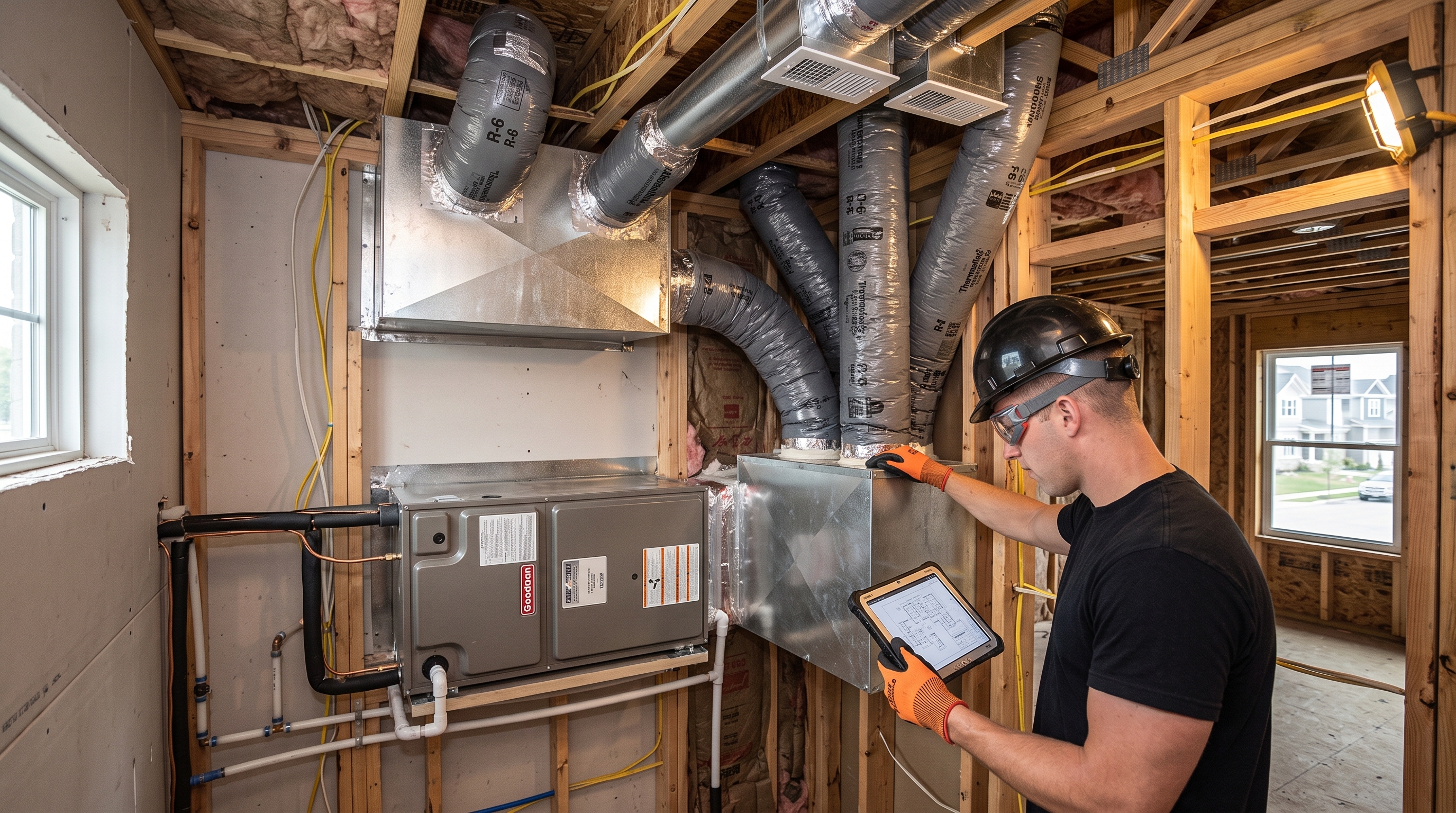
For townhouses, penthouses, or apartments with accessible exterior wall penetrations, a dedicated make-up air intake draws fresh outdoor air through a motorized low-leakage damper. The air passes through MERV 13 filtration and across an electric modulating heating coil that tempers freezing winter air from 15°F up to a comfortable 68°F before discharging it into the kitchen area via linear architectural diffusers.
Interlocked Variable-Speed Fan Tracking
Modern range hoods feature multi-speed blowers. An engineered make-up air system must not deliver 1,000 CFM when the chef only has the hood operating on low speed at 300 CFM. We install current-sensing relays on the exhaust hood motor wiring or differential pressure transducers that communicate with variable-speed ECM supply fans. As the cook adjusts the range hood from speed 1 to speed 4, the make-up air supply tracks the exhaust rate in real-time, maintaining building neutral pressure (±2 Pa).
Integrated Central DOAS & VRF Tempered Injection
In high-rise condominium towers where cutting new exterior wall louvers is prohibited by the Landmarks Preservation Commission (LPC) or facade easement restrictions, our mechanical engineers integrate kitchen make-up air into the apartment's central Dedicated Outdoor Air System (DOAS) or Multi-Zone VRF system. Tempered air is diverted from general living areas toward the kitchen perimeter whenever range exhaust sensors trigger.
Exterior Penetrations, Fire Dampers & Co-Op Board Approvals
Routing commercial-caliber ductwork through historic pre-war floor plates demands meticulous code compliance:
- Grease Duct Integrity & Fire Separation: Kitchen range hoods exceeding 400 CFM must be routed through smooth, heavy-gauge galvanized steel or stainless steel ductwork (NYC Mechanical Code mandates min. 24-gauge). Flexible aluminum flex-duct is illegal for grease-bearing kitchen exhaust.
- Fire & Smoke Damper Restrictions: While standard HVAC ducts require fire dampers at rated demising walls, kitchen grease exhaust ducts generally prohibit standard fusible-link fire dampers because grease buildup can prevent proper closure. Instead, ducts must be enclosed in a continuous fire-rated shaft (1-hour or 2-hour rated).
- Landmark Exterior Louvers: When discharging exhaust or drawing make-up air through building facades in historic districts (e.g., Upper East Side, Greenwich Village, Tribeca), exterior louvers must receive LPC staff approval, matching existing brick tint or masonry finishes with custom anodized coatings.
Collaboration with Interior Designers & Kitchen Craftsmen
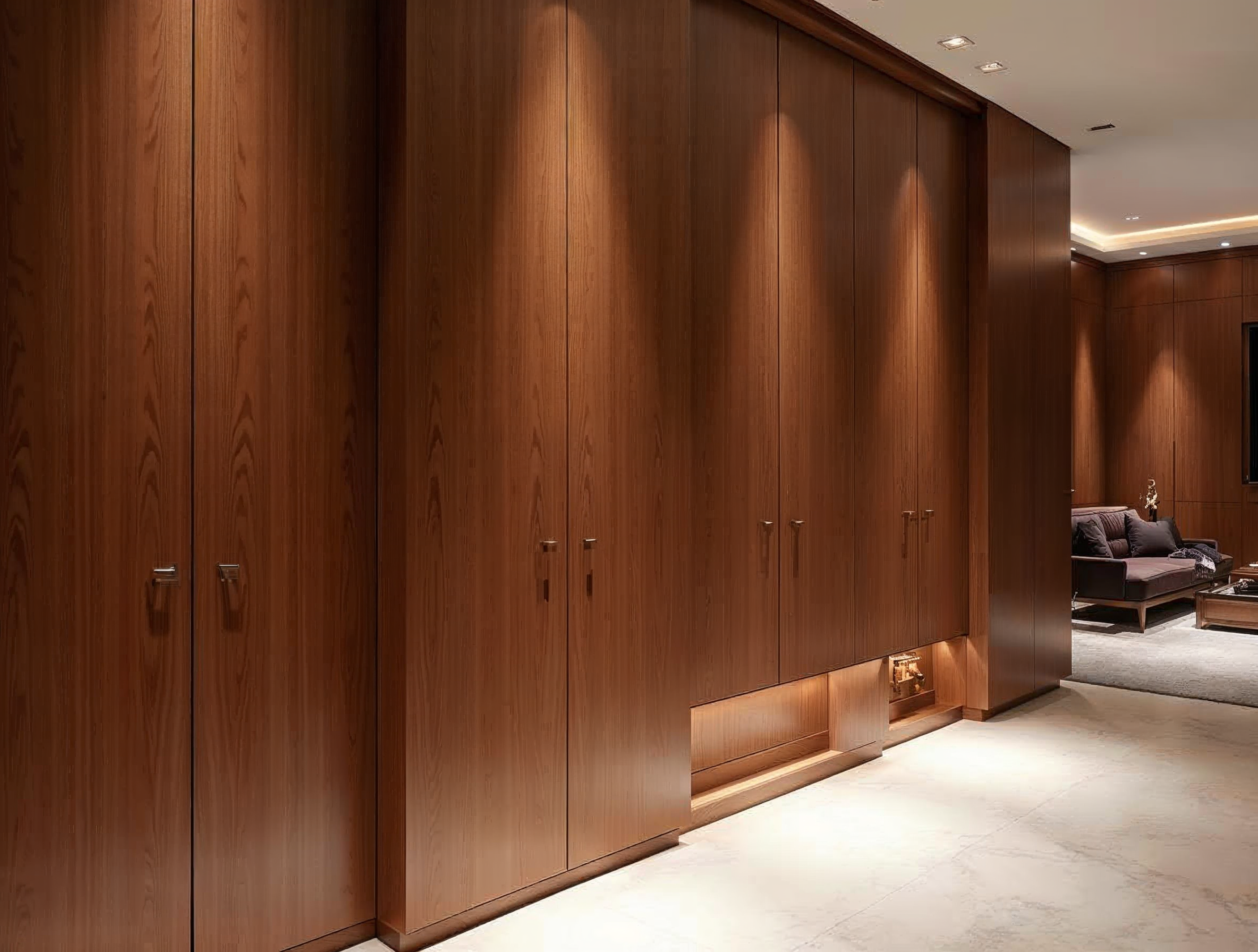
High-performance mechanical ventilation must perform invisibly. Discerning luxury homeowners do not want visible industrial supply grills or noisy commercial blowers dominating their custom millwork kitchens.
At TRD Builders, our MEP engineers coordinate duct routing and remote in-line acoustic silencers during the earliest 3D BIM design phase. We partner closely with premier interior general contractors and luxury kitchen cabinetry specialists—such as KS Renovation Group and bespoke joinery craftsmen—to seamlessly integrate concealed make-up air plenum boxes, hidden toe-kick supplies, and architectural linear slot diffusers directly into custom cabinetry valances and coffered ceiling reveals.
When mechanical engineering precision backs culinary ambition, high-powered kitchen suites operate safely, silently, and odor-free in the most prestigious Manhattan residences.